Fuel leak &
fuel tank repair
Integral tanks, bladder cells, surge tanks and fuel quantity systems. We isolate the true leak path — not the exit point — and repair it once, with a one-year no-re-leak warranty.
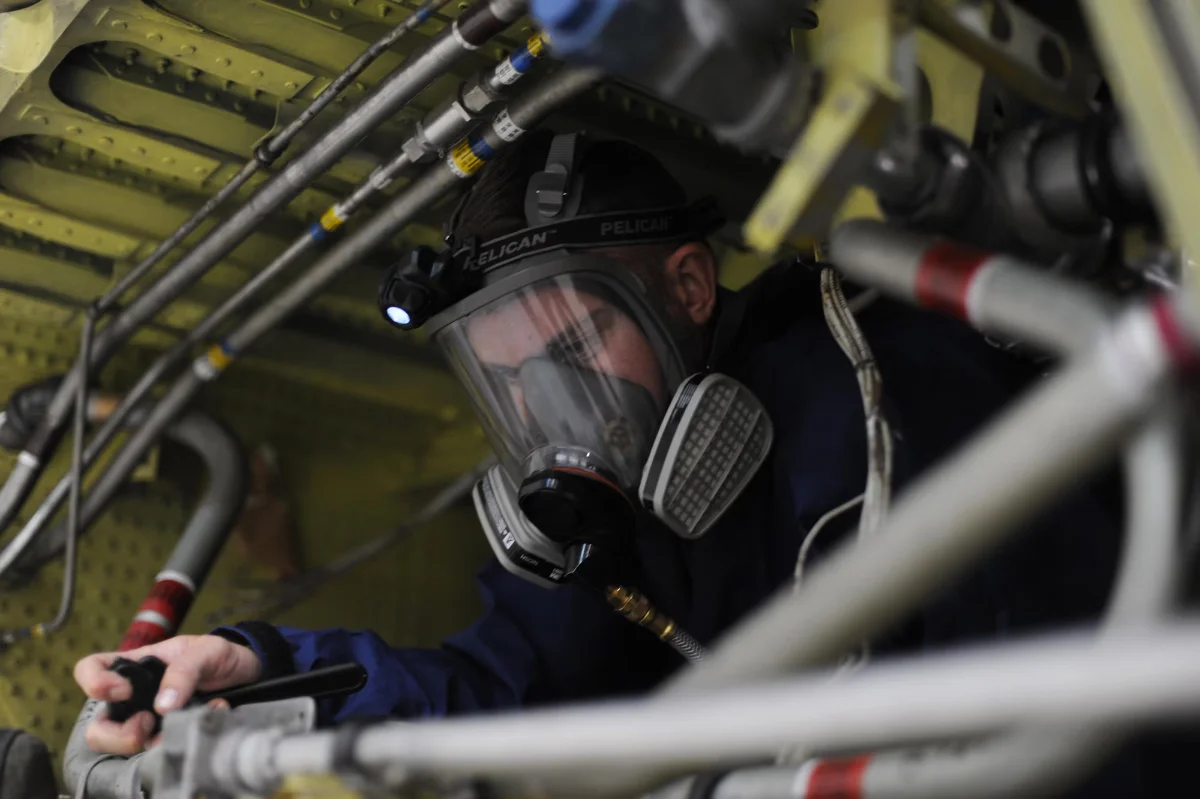
We map before we open a panel.
Every leak is documented against the manufacturer's classification with photos and a leak-path diagram before repair begins — so you know exactly what is being fixed and why.
Capabilities
Leak detection & isolation
Pressure and vacuum methods, dye and blue-light tracing, fillet and injection-path analysis to locate the entry point, not just the exit.
Integral tank re-seal
Sealant removal, surface prep, fillet, fay and injection sealing to OEM specifications, including access-panel and fastener sealing.
Bladder & surge cells
Removal, inspection, patching and replacement of bladder-type fuel cells and surge tanks, with fit-up and leak check.
Fuel quantity systems
Probe, compensator, harness and indicator troubleshooting; component replacement and system calibration.
Contamination remediation
Microbial growth, water and debris removal, biocide treatment, tank cleaning and post-treatment sampling. Dedicated service →
Defuel, purge & entry
Confined-space-qualified technicians with atmosphere monitoring, ventilation and fire-watch procedures on every job.
No
re-leak.
Every fuel leak and fuel tank repair ASG performs carries a one-year warranty. If the same leak path returns, we come back and fix it — travel included.
- — 12 months from return to service
- — Same leak path, same aircraft
- — Repair documented with photos and leak-path diagram
Questions we get
Can you repair a leak without pulling the aircraft into a hangar?+
Often, yes. Many external fillet and access-panel repairs are performed on the ramp. Sealant cure times are temperature-dependent, so cold weather may require a hangar or heated enclosure.
Which aircraft do you work on?+
Business jets, regional and narrow-body airliners, turboprops and general aviation. Send us the type and we will confirm coverage and data availability.
How long does a typical repair take?+
A single external seep: one to two days including cure. Internal tank entry with re-seal: three to five days depending on access and cure temperature.
Send us the leak. We will send back a plan.
Aircraft type, location, a photo of the wetted area and your timeline. Quote within one business day.
Request a quote →